

Choosing metal pipes for a fence

Published January 2025
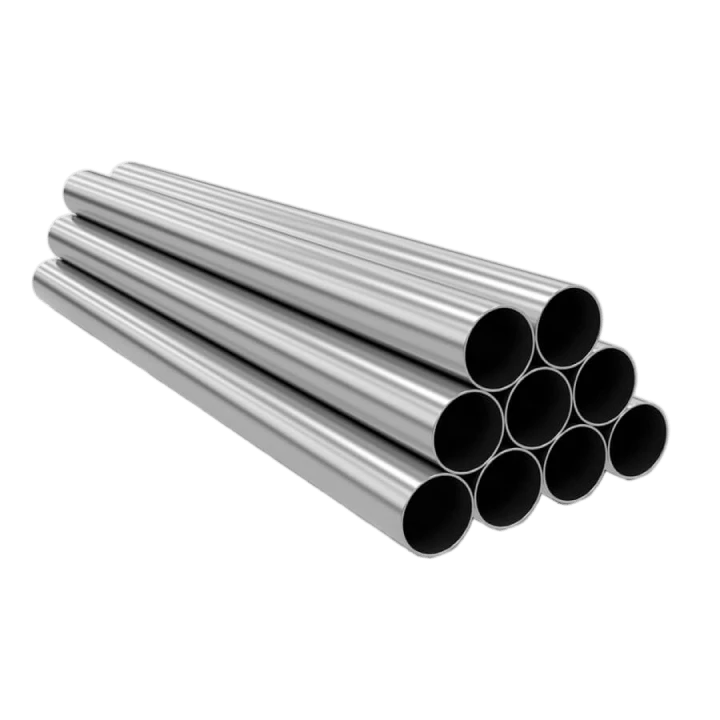
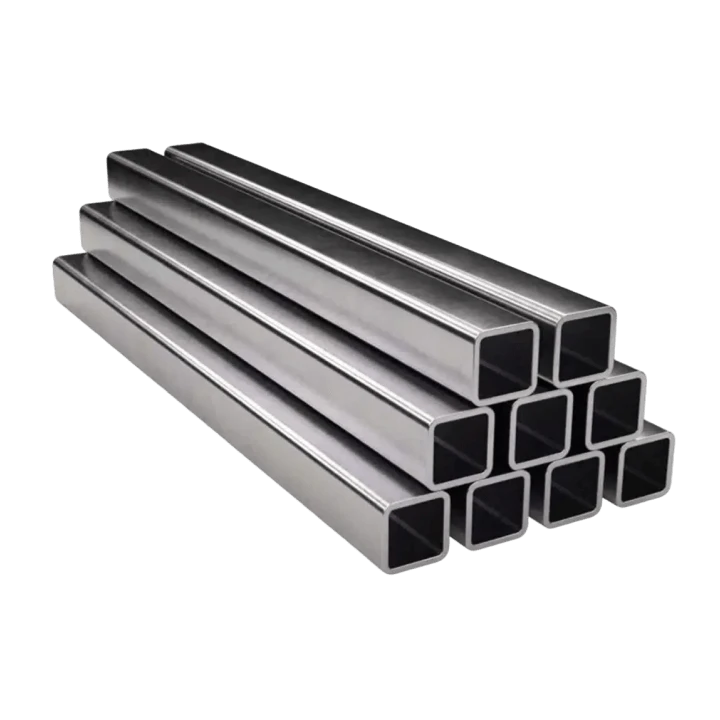
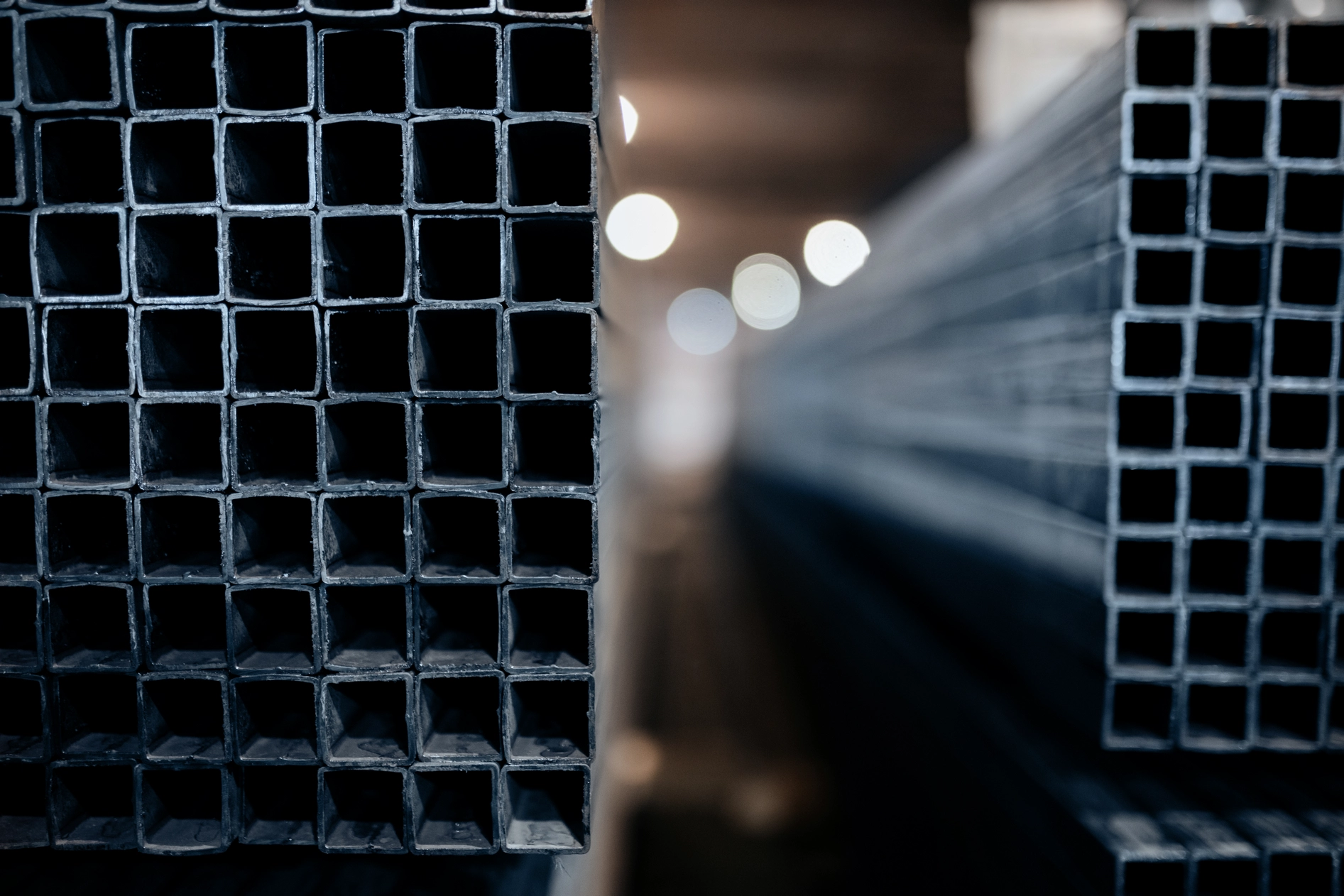
Metal pipes are considered a universal solution for building a fence frame. They are strong and durable, and any fencing can be easily attached to them: from wood and mesh to cellular polycarbonate or profiled sheeting. Pipes with round and square cross-sections are used most often.
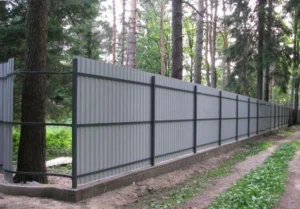
A base made of round pipes is lighter than one made of square pipes at the same frame rigidity. Using them can therefore save you a significant amount (about 20%). In addition, they are easier to install in soft soil (by screwing them in with a hand crank). At the same time, for many fence designs profile pipes are preferable because they offer the following advantages:
- installing a fence made of corrugated sheeting, slate and other cladding materials of variable cross-section becomes much easier; they are easier to weld or cut, and the fence is fixed more securely;
- they can be combined with sectional reinforced concrete post elements to increase their load-bearing capacity, especially when building gate posts;
- they can be used not only for posts but also for horizontal elements.
- they provide greater bending strength of the structure.
Diameter and thickness
The potential stability of the frame depends directly on the pipe thickness. A fence with thin base posts can be destroyed even by strong gusts of wind. Therefore, for structures 1.8 to 2.3 meters high, choose round pipes with a diameter of at least 50 mm or square pipes with a section of 80×80 / 100×100 mm. In both cases the wall thickness should be 2.3–3 mm.
Which pipe to use for a chain-link fence?
Both square and round pipes can be used to build such a structure. The former are used more often, as it is easier to mount chain-link mesh on them.
Since the wind load on such a fence is minimal, you can use 50×50 mm posts, and in some cases (structures up to 1.6 m high) even 40×40 mm posts with a wall thickness of 1.8–2.5 mm. However, to prevent the frame from deforming after the mesh is tensioned, it is still worth using fairly heavy profiles (80×80 or 60×60 mm) for corner posts and entrance posts, which usually also carry other metal structures (wicket gates, etc.).
Profile pipes for fences
When building heavy fences, for example from profiled sheeting, cross members should be added to the frame. They provide the required rigidity of the fence. The posts for such a fence are also made of square profile pipes, while rectangular profiles are used as cross beams (a typical option is 40×20). Their thickness, however, should not be less than 1.5 mm.
Installing fence pipes
Since the posts are the load-bearing elements of the entire structure, the durability and appearance of the fence will depend on the quality of installation. Calculate the span width and fence height in advance and, if possible, take into account the wind strength at the specific site. Only then choose the pipe thickness and quantity.
Securing the posts
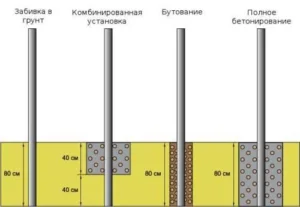
There are several ways to install posts. The choice depends on the soil, the weight of the structure and the complexity of the work. They include:
- Concreting is a universal method most often used for heavy fences. It involves drilling a hole at least 80 cm deep, placing the post and fixing it with mortar.
- Rubble backfilling is suitable for medium-weight fences and is much cheaper than concreting. It involves making a 0.8–1.5 meter cavity in the ground, securing the pipe in it with braces and fixing the post with crushed stone.
- Driving is the most common method for light, low structures in dense soils. The posts are simply driven into the ground with a rotary hammer or sledgehammer.
Spacing between fence pipes
The distance between posts depends on the weight of the rails, the height of the structure and other factors. For a typical fence it is 2.5–3 m. This is enough for convenient attachment of the cladding and the required rigidity. In very windy regions, the post spacing should be reduced to 2 m.
How tall should fence posts be?
This depends on the soil type (and its frost depth) as well as the dimensions of the planned structure. Typically, the above-ground part of the post is 2/3 of the total pipe length, and the embedment depth tolerance can range from 15 to 30 cm.
News
All news
30.09.2026
Hot-rolled and cold-rolled strip: what is the difference and which to choose
03.09.2026
Profile Pipe Trusses for Canopies: A Complete Guide to Selection, Calculation and Installation
06.02.2026
Railway siding services in Temirtau: receiving, unloading, storage
06.02.2026